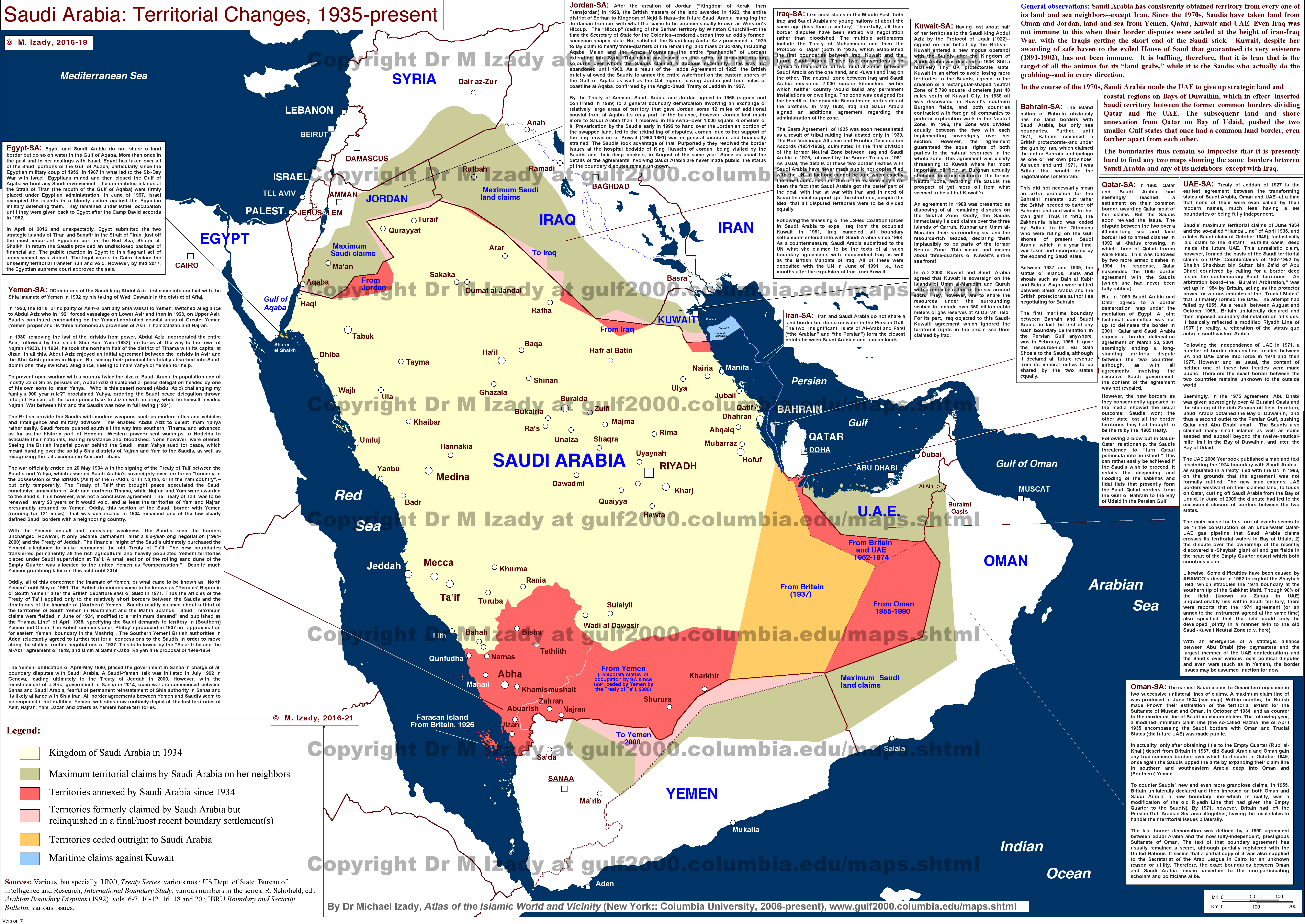
There was a slight misinformation in yesterday’s piece about the Ansar Allah blitz operation in Yemen. It said:
Though unconfirmed it is believed that Ansar Allah has additionally fired missiles into Saudi Arabia which destroyed at least parts of its East-West pipeline. This all together leaves no export route for Saudi oil.
There is now confirmation from the Saudi government that at least two pumping stations of the Saudi East-West pipeline have been attacked and destroyed. No product is getting pumped through the pipeline.
But the culprits for the attack where not Ansar Allah. The Saudi’s claim, and other sources confirm, that drones launched by Shia militia (Hashd al-Shaabi) in Iraq targeted and destroyed the pumping stations.
Elijah Magnier provides background to this:
Several weeks after joint US-Saudi air strikes killed at least 20 members of Iraq’s Popular Mobilisation Forces, or Hashd al-Shaabi, and wounded 32 others, the conflict has returned to Saudi territory. Iraqi resistance factions had vowed to retaliate for the attacks, which they described as a dangerous violation of Iraq’s sovereignty.
Saudi Arabia has now temporarily shut its strategic East-West oil pipeline after several drones launched from Iraqi territory struck installations in the Riyadh and Medina regions. ..
…
Baghdad acknowledged that the drones had been launched from Maysan province in southern Iraq. Prime Minister Ali al-Zaidi ordered the dismissal of the province’s operations commander after an investigation concluded that the attacks originated from territory under his authority. The government also launched a broad security operation to identify and arrest those responsible.Riyadh has said that, at Baghdad’s request, it will refrain from retaliating on Iraqi territory “at this stage”.
During the U.S.-Saudi bombing in Iraq three Iranian and one Yemeni officer were also killed. No one will doubt that the Hashd al-Shaabi militia has coordinated its drone attack with Ansar Allah in Yemen as well as with Iran.
But the Iraqi government can not do much to rein in the Iran aligned militia which have deep roots within the Iraqi population. Iranian gas is fueling Iraqi power stations and Iraq already has problems to pay for it:
If gas deliveries continue, Iraq can contain the immediate electricity consequences while attempting to prevent further attacks from its territory. If Tehran suspends supplies—or Baghdad is forced by Washington to stop importing them—the country could face severe power shortages and growing domestic unrest. Conversely, continuing to consume Iranian gas without providing Iran access to its accumulated revenues will become increasingly difficult to defend politically in Tehran.
The pipeline attack has consequently placed Baghdad between three competing pressures: Saudi demands that Iraqi territory not be used for cross-border attacks, American demands that Iraq restrict Iran’s financial access, and Iranian expectations that Baghdad pay its energy debts and resist US economic coercion. Iraq’s attempt to satisfy all three may now be reaching its limits.
The Saudi rulers are likewise reaching their limits. They are paying dearly for their deep relations with the U.S.:
- Hormuz – their export route to the North – is closed by a war with Iran that the US-Israel started
- Their pipeline to the South was taken offline from Iraq, a country the US broke with another war it started
- They’re fighting – and losing – against the Houthis in Yemen, whose war against them restarted because of the US-Israel war with Iran
- The US is obviously incapable to defend them against these attacks and is now apparently flat-out refusing to intervene in Yemen
- They are bleeding money at an accelerating rate and, ironically, we may soon see an “inverted petrodollar” situation whereby, instead of recycling oil profits into US Treasuries, they’ll be forced to sell them to cover oil losses caused by US wars
All in all, hard to overstate what a complete clusterfuck this represents.
The US is supposedly running “operation economic outcast” on Iran but, very concretely, the Saudis are getting at least as badly “outcasted” as the Iranians in just about every dimension.
And, unlike Iran, Saudi Arabia isn’t structurally built to survive this. ..
Despite its oil wealth Saudi Arabia isn’t in a good financial state. Two weeks ago it was already negotiating for fresh loans:
Saudi Arabia is in early talks to raise at least $8 billion from a fresh loan, as it steps up efforts to diversify funding sources amid the economic fallout from the Iran war.
The kingdom’s National Debt Management Center has begun sounding out banks about a potential deal, according to people familiar with the matter, who requested anonymity to discuss private information.
State-backed oil major Saudi Aramco is holding similar discussions with banks, some of the people said.
…
Benchmark Brent crude has averaged around $87 a barrel this year, helping to ease pressure on the kingdom’s finances in the wake of the war. Even so, Saudi Arabia posted a 34.3 billion-riyal ($9.1 billion) second-quarter deficit.
Oil prices are high but that does not help Riyadh when the wars waged against Iran and others close the export routes for Saudi oil.
One should keep in mind that Saudi Arabia is a diverse tribal society where one family tribe keeps control by distributing financial largesses to other tribal leaders and the population. The rulers need all the oil income they can get to keep themselves in power. If the money stops flowing the position of the ruling family may well come into doubt.
While an Ansar Allah spokesman had claimed yesterday that the group would refrain from further expansion there is some news that it continues to move towards cities held by Saudi and UAE paid militia. Marib and Taiz seem to be in their immediate eyesight.

bigger

Another rumor says that Saudi Arabia is moving Jihadi fighters from Syria through Saudi Arabia into Yemen. These fanatic mercenaries will join others, primarily hired in Sudan, to fight against the Houthi. So far no such force was able to make much of a difference in the fight.